Master Basic Hindi Words for Everyday Conversations

The fastest way to begin speaking Hindi is not by diving into grammar rules or complex sentence structures. It starts with learning basic Hindi words—simple, high-frequency terms that unlock communication. If you can recognize and reuse 100–200 essential Hindi words, you can manage greetings, food orders, transport, emotions and more in everyday conversations.

This core vocabulary is the first layer of fluency. You don’t need to master tenses before you ask for पानी (pānī, water) or say नमस्ते (namaste, hello). A small bank of high-utility words gets you speaking quickly and gives you the confidence to keep going.

Another advantage is repetition. The same basic Hindi words appear often in signage, conversations and media. When you repeatedly encounter words like धन्यवाद (dhanyavād, thank you) or दोस्त (dost, friend), your recognition is strengthened.

Beyond communication, these must-know Hindi words also help you build cultural familiarity. Polite social phrases go a long way with native speakers. Showing that you can say नमस्ते or धन्यवाद makes interactions warmer, builds rapport and earns goodwill.

A solid base of essential Hindi words opens doors not only to everyday exchanges but also to a deeper appreciation of culture.

Essential Hindi Words and Phrases for Everyday Use

When building your Hindi vocabulary list, think in terms of situations. Travelers, beginners and anyone seeking everyday Hindi speaking practice should start with the words that appear most often in greetings, essentials and daily interactions.

Greetings and Polite Expressions

  • नमस्ते (namaste) — Hello
  • धन्यवाद (dhanyavād) — Thank you
  • कृपया (kripayā) — Please
  • अलविदा (alvidā) — Goodbye
  • शुभ प्रभात (shubh prabhāt) — Good morning
  • शुभ रात्रि (shubh rātri) — Good night

Everyday Essentials

  • पानी (pānī) — Water
  • खाना (khānā) — Food
  • चाय (chāy) — Tea
  • दूध (dūdh) — Milk
  • नमक (namak) — Salt
  • रोटी (roṭī) — Bread
  • दाल (dāl) — Lentils
  • सब्ज़ी (sabzī) — Vegetables

Useful Hindi Phrases for Tourists

  • यह क्या है? (yeh kyā hai?) — What is this?
  • कितना? (kitnā?) — How much?
  • मदद! (madad!) — Help!
  • कहाँ है…? (kahā̃ hai…?) — Where is…?
  • मुझे बिल दीजिए (mujhe bil dījie) — Please give me the bill
  • स्टेशन कहाँ है? (sṭeśan kahā̃ hai?) — Where is the station?

Practical Hindi Words for Movement and Safety

  • चलो (chalo) — Let’s go
  • रुको (ruko) — Stop
  • बायाँ (bāyā̃) — Left
  • दायाँ (dāyā̃) — Right
  • जल्दी (jaldī) — Quickly
  • धीरे (dhīre) — Slowly

Numbers for Everyday Use

Numbers are essential for shopping, bargaining, telling time and directions. Expanding beyond 1–5 will help you navigate daily life.

1 — एक (ek)
2 — दो (do)
3 — तीन (tīn)
4 — चार (chār)
5 — पाँच (pā̃c)
6 — छह (chhah)
7 — सात (sāt)
8 — आठ (āṭh)
9 — नौ (nau)
10 — दस (das)
11 — ग्यारह (gyārah)
12 — बारह (bārah)
13 — तेरह (terah)
14 — चौदह (chaudah)
15 — पंद्रह (pandrah)
16 — सोलह (solah)
17 — सत्रह (satrah)
18 — अठारह (aṭhārah)
19 — उन्नीस (unnīs)
20 — बीस (bīs)
30 — तीस (tīs)
40 — चालीस (chālīs)
50 — पचास (pacās)
100 — सौ (sau)

Cognates can also give you confidence. Words like फ़ोन (phone), बस (bus), and टिकट (ṭikaṭ) are borrowed into the Hindi language, making them instantly recognizable.

This practical grouping helps you focus on words you will actually use. Whether you need Hindi greetings and phrases, shopping vocabulary or safety expressions, these categories give you a structured way to begin.

How to Ask Questions in Hindi

Questions are the foundation of conversation. In Hindi, a small set of words allows you to ask about almost anything.

The word क्या (kyā, what) is central to forming questions. A simple structure is: question word + verb + subject. For example, यह क्या है? (yeh kyā hai?) means “What is this?”

Here are the anchor words every beginner should know:

  • कहाँ (kahā̃) — Where
  • कब (kab) — When
  • कौन (kaun) — Who
  • क्यों (kyon) — Why
  • कैसे (kaise) — How

Building Yes/No Questions

Another common structure is using क्या at the start:

  • क्या आप तैयार हैं? (kyā āp tayyār hain?) — Are you ready?
  • क्या यह आपका है? (kyā yeh āpkā hai?) — Is this yours?

Sample Mini Dialogues

A few short exchanges show how much you can do with only question words:

  • A: आप कहाँ जा रहे हैं? (āp kahā̃ jā rahe hain?) — Where are you going?
  • B: मैं बाज़ार जा रहा हूँ। (main bāzār jā rahā hū̃.) — I am going to the market.
  • A: यह क्या है? (yeh kyā hai?) — What is this?
  • B: यह टिकट है। (yeh ṭikaṭ hai.) — This is a ticket.

Even if grammar isn’t perfect, Hindi speakers will often understand as long as your question word is clear. Intonation also helps—Hindi uses a rising tone at the end of questions, similar to English.

Using these beginner Hindi expressions makes your conversations active. Instead of only memorizing statements, you engage by asking. Curiosity drives learning, and these words turn passive knowledge into interaction.

Time, Days & Descriptions: Building Context

To go beyond survival Hindi, you need vocabulary for time and description. These words let you talk about schedules, moods and everyday life.

Talking About Time

A unique feature in Hindi is the word कल (kal), which can mean either yesterday or tomorrow. Context and verb tense reveal the intended meaning.

Other useful time words include:

  • सुबह (subah) — Morning
  • दोपहर (dopahar) — Afternoon
  • शाम (shām) — Evening
  • रात (rāt) — Night
  • अब (ab) — Now

Cultural nuance plays a role here. “Now” in Hindi can sometimes mean “soon,” reflecting a more flexible approach to time than in English.

With these, you can build sentences like कल शाम चलेंगे? (kal shām caleṅge?) — “Shall we go tomorrow evening?”

Days of the Week

Each day in Hindi ends with “-वार” (vār):

  • सोमवार (somvār) — Monday
  • मंगलवार (maṅgalvār) — Tuesday
  • बुधवार (budhvār) — Wednesday
  • गुरुवार (guruvār) — Thursday
  • शुक्रवार (śukravār) — Friday
  • शनिवार (shanivār) — Saturday
  • रविवार (ravivār) — Sunday

Examples in use:

  • सोमवार को काम है। (somvār ko kām hai.) — I have work on Monday.
  • रविवार छुट्टी है। (ravivār chuṭṭī hai.) — Sunday is a holiday.

Descriptions and Emotions

Adjectives and descriptive terms expand your beginner Hindi vocabulary:

  • बड़ा (baṛā) — Big
  • छोटा (choṭā) — Small
  • गरम (garam) — Hot
  • ठंडा (ṭhaṇḍā) — Cold
  • अच्छा (acchā) — Good
  • बुरा (burā) — Bad
  • पास (pās) — Near
  • दूर (dūr) — Far
  • खुश (khush) — Happy
  • उदास (udās) — Sad

These words make your Hindi vocabulary list more expressive, giving you the ability to describe objects, feelings and situations.

What Comes After Basic Vocabulary?

Once you’ve built a foundation of essential Hindi words, the next question is retention and expansion. Most day-to-day conversations in the Hindi language use fewer than 500 words, which makes this stage manageable.

Practice and Retention

Flashcards and repetition remain effective for memorization. Some learners label household items with Hindi words, creating everyday exposure. Short dialogues with tutors or language partners also keep vocabulary active.

Connecting Words to Grammar

Vocabulary alone is powerful, but combining words into simple sentences gives you a sense of progress. Once you know verbs like खाना (to eat) and जाना (to go), you can form practical sentences for everyday Hindi speaking practice.

Immersive Techniques

Listening to Hindi songs, watching Hindi films with subtitles, or following local news adds variety to your exposure. Each reinforces your vocabulary in real-life contexts, making retention easier.

Building on Your Foundation: Where to Go Next

Learning Hindi words is the gateway to conversation. To achieve fluency, you need to move from memorizing lists to practicing real-time interactions.

From Words to Conversations

Using must-know Hindi words in live dialogue trains your listening and speaking skills. As you expand your Hindi vocabulary, focus on pronunciation and rhythm. Hindi’s sounds and stress patterns differ from English, so this practice builds clarity.

Avoiding Plateaus

Many speakers stall after learning basic Hindi. The reason is often lack of structure or feedback. Without correction and consistent practice, it’s easy to form habits that limit progress.

Guided Learning Options

This is where structured learning helps. If you want a stronger foundation, you can learn Hindi online through virtual classes. These provide not only vocabulary practice but also conversational fluency and cultural insight.

For a more systematic start, you may consider beginner Hindi classes. A guided program ensures that you expand from basic vocabulary into grammar, sentence building and fluent speech with confidence.

Final Thoughts

Starting with a Hindi word list for travel, social greetings or shopping is the most efficient way to build confidence. As you continue, anchor your learning around beginner Hindi expressions, question words, days of the week and descriptive vocabulary. With everyday practice and structured support, your Hindi vocabulary for beginners evolves into real fluency.

One helpful daily routine is to pick five new words, write them on sticky notes, and use them in conversation or label objects around your home. Even five minutes of everyday Hindi speaking practice can create long-term retention.

Pairing your growing vocabulary with the Hindi alphabet also accelerates learning. Recognizing letters makes street signs, menus and media more approachable, reinforcing the words you already know.

Mastering these building blocks of the Hindi language is not only about communication. It’s also about connection—each must-know Hindi word brings you closer to people, culture, and authentic experiences in the Hindi-speaking world.


How to Speak Hindi: Pronunciation, Grammar, & Real-World Fluency

The first step in learning how to speak Hindi is not memorizing grammar charts. It begins with listening. Hindi is a phonetic language, which means what you hear is what you say. Hearing native Hindi speakers builds a natural sense of rhythm, intonation and pronunciation.

Bollywood films, Hindi songs and podcasts are excellent ways to immerse yourself in the sound of the language. For guided exposure, structured online Hindi lessons ensure you hear authentic pronunciation and have the chance to repeat phrases in real time with feedback.

Even if you do not understand every Hindi word or phrase, repeating what you hear trains your mouth to form the right sounds. Beginners often gain confidence by copying tone and cadence before they can translate. This jumpstarts conversational Hindi for beginners, making spoken practice less intimidating.

Master Everyday Hindi Phrases First

If your goal is to learn Hindi for real conversations, start with foundational phrases. Greetings and social expressions are the backbone of polite communication and give you confidence in early interactions.

Common starting points include:

  • नमस्ते (namaste) — Hello
  • आप कैसे हैं? (āp kaise hain?) — How are you?
  • मेरा नाम ___ है (merā nām ___ hai) — My name is ___
  • क्या यह ___ है? (kyā yeh ___ hai?) — Is this ___?

Some greetings you find in textbooks, like शुभ प्रभात (shubh prabhāt, good morning) or शुभ रात्रि (shubh rātri, good night), are technically correct but less common in everyday conversations. In most real-life situations, people simply say नमस्ते (namaste) or नमस्कार (namaskār) as a morning greeting, and phrases like फिर मिलेंगे (phir milenge, see you again) or चलता हूँ/चलती हूँ (caltā hū̃/caltī hū̃, “I’ll get going”) when parting. Including the formal versions in your vocabulary is still useful, but knowing the everyday alternatives helps you sound more natural.

These Hindi phrases for travel and daily use come up frequently. They also reinforce key grammatical structures, like the use of क्या (kyā) for questions.

Politeness is another important feature of the Hindi language. Hindi uses different words for “you”: तू (tū), तुम (tum), and आप (āp). For respectful conversation, especially with strangers or elders, Hindi speakers should always use आप. Choosing the wrong form can come across as impolite, so this distinction is worth practicing early.

Roleplay and repetition are powerful tools. A new Hindi speaker can record themselves asking a question, then practice answering it as if playing both roles. This type of drill builds response speed and keeps your speaking practice active instead of passive.

Hindi Grammar Basics & Hindi Fluency Tips

While vocabulary and phrases get you started, a few grammar rules make your speech clearer and more accurate. Understanding the basics helps you move from memorized lines to real conversations.

The first building block is verb conjugation. Hindi verbs change form depending on subject, gender and tense. For example, the verb “to go” (जाना — jānā) shifts depending on who is speaking:

  • मैं जाता हूँ (main jātā hū̃) — I go (male speaker)
  • मैं जाती हूँ (main jātī hū̃) — I go (female speaker)

Gender matters not only for verbs but also for adjectives. Words like अच्छा (acchā, good) become अच्छी (acchī) when referring to feminine nouns. For a Hindi speaker, these differences are natural, but for a beginner they can take practice.

Instead of memorizing rules in isolation, focus on patterns. For example, group several Hindi phrases that use the same verb form or gender rule. Chunking makes Hindi grammar more approachable and helps you notice recurring structures in conversational Hindi.

Build a Practical Hindi Vocabulary

A strong vocabulary makes speaking possible. But you do not need thousands of words to start. Prioritize categories that match your everyday needs.

High-value areas include:

  • Family and relationships
  • Numbers and time
  • Food and drink
  • Places and directions
  • Common actions and Hindi verbs

This thematic focus ensures you learn what you will actually use. For example, a set of Hindi words for ordering food will help you more than memorizing academic terms.

Reinforce your Hindi vocabulary daily by labeling your surroundings. Sticky notes with Hindi words—written in the Devanagari script if possible—connect everyday objects with their names. Spaced repetition tools and flashcards can also keep your recall sharp.

Grouping words by scenario is another useful technique. A Hindi speaking guide for travelers might include vocabulary for asking directions, buying tickets or greeting hotel staff. Learning in context helps you recall words naturally when you need them in conversation.

Practice Conversational Hindi Consistently

The key to developing Hindi communication skills is consistent speaking practice. You do not have to live in India to do this. Many tools and strategies make it possible to practice anywhere.

Speaking aloud daily, even in short bursts, builds confidence. Self-talk, roleplay and reading Hindi phrases out loud all count as basic Hindi speaking practice. Online platforms connect learners with native Hindi speakers for structured conversations, while tutoring sessions provide corrective feedback.

Start small with predictable exchanges:

  • “How are you?”
  • “I’m fine.”
  • “What is this?”
  • “It is water.”

These mini-dialogues build a rhythm of call-and-response. Over time, you can layer in more complex questions and answers.

Set clear speaking goals. Even five minutes a day of focused practice leads to steady progress. Track your speaking time and challenge yourself to increase it gradually. In language learning, consistency matters more than perfection.

Speak Hindi More Fluently Through Cultural Context

Speaking Hindi fluently means more than stringing words together. Culture shapes how the language is spoken.

Formality is a major factor. Politeness levels determine which pronouns and verbs you use, and gestures often accompany spoken language. For instance, head nods and hand movements carry meaning in conversation.

Hindi also tends to be expressive and rhythmic. Native Hindi speakers often vary pitch and tone to emphasize emotion. Paying attention to these nuances helps you sound more natural.

Immersing yourself in cultural content accelerates learning. Bollywood films expose you to everyday speech patterns, its music introduces formal poetic expressions and folk tales highlight idiomatic phrases. This type of exposure gives you both vocabulary and cultural awareness at the same time.

Common Speaking Mistakes and How to Avoid Them

Every Hindi learner faces challenges when moving from theory to speech. Awareness of common mistakes helps you avoid fossilized errors.

One frequent trap is pronunciation. English speakers often confuse ब (ba) and व (va), or overlook aspiration in sounds like त (ta) versus थ (tha). Retroflex consonants, such as ड़ (ṛa) and ढ़ (ṛha), also require practice since they do not exist in English. Listening drills and minimal pair practice sharpen your ear for these differences.

Another issue is over-reliance on transliteration. Reading Hindi words in English letters can lead to mispronunciation. For example, beginners may add extra vowel sounds that are not present in the original. Familiarity with the Hindi alphabet prevents these errors.

Stress and rhythm also matter. Unlike English, Hindi does not use heavy stress on certain syllables. Instead, it has a flat, syllable-timed rhythm. Shifting to this pattern helps you sound more like a native Hindi speaker.

Finally, many learners delay speaking out of fear of mistakes. But errors are part of the process. Recording yourself, listening back and correcting gently is one of the best ways to track progress.

Setting Speaking Goals for Hindi Learners

Fluency is a journey, not a fixed milestone. Setting realistic goals helps you measure progress without getting discouraged.

Instead of focusing on how long until you are fluent, frame goals around practical tasks. For example:

  • Order a meal in Hindi
  • Hold a basic conversation with a tutor
  • Ask and answer questions about family or hobbies

Tracking progress through output is more meaningful than just studying. Journaling in Hindi or recording short speaking check-ins every few weeks lets you see measurable growth.

For structured support, guided instruction accelerates progress. With beginner Hindi classes, you receive feedback on grammar, pronunciation and real conversation practice. If you want a more flexible format, you can learn Hindi online with interactive classes, which provide live practice and cultural insights without travel.

Final Thoughts

Learning how to talk in Hindi is about building small, steady steps into a lasting skill. Listening and mimicry train your ear and voice. Everyday Hindi phrases give you practical confidence. Grammar basics and focused vocabulary create structure. Consistent practice keeps your momentum alive.

By engaging with cultural context and staying aware of common mistakes, you sharpen your Hindi communication skills and move toward fluency.

Most importantly, keep speaking—even imperfectly. Each Hindi phrase you attempt brings you closer to sounding natural, building connections and experiencing the richness of the Hindi language with confidence.

How to Read Hindi: Getting Started with the Script, Syllables and Words

If you’re serious about becoming fluent, learning to read Hindi is a smart place to start. Hindi is written in the Devanagari script, a phonetic system that connects sound and symbol in a remarkably consistent way. Once you understand those patterns, you’re on the path to proper pronunciation. With consistent practice, you’ll stop guessing at sounds and start engaging with the Hindi language exactly as native speakers do.

Devanagari assigns a unique symbol to each sound, so mastering it early helps you pronounce words correctly, develop natural intonation and remember vocabulary faster. Transliteration in Roman letters (the alphabet used for English and many other Western languages) can only take you so far. It often hides important sound differences, giving a false sense of accuracy.

Many letters look and sound similar to an English speaker’s ear, but they’re not the same. For example, त (ta) and थ (tha) differ in whether you add a burst of air when saying them. Others, like ट (ṭa) and त (ta), differ in where your tongue touches—farther back or closer to your teeth. Without the script, you might never realize you’ve been pronouncing these sounds incorrectly.

Learning how to read Hindi is the gateway to fluency. Beginners who skip learning the script tend to form “aural guesses,” mental approximations of words based on what they think they hear. Over time, these guesses harden into incorrect habits that are harder to fix later.

Getting Started with Devanagari

Devanagari is an abugida, a writing system where consonant-vowel units form the foundation, rather than isolated letters. Hindi uses vowels (स्वर), consonants (व्यंजन), and matras (vowel markers), all connected by a hallmark horizontal line across the top called the shirorekha.

In many South Asian scripts, consonants are arranged not randomly but by how and where they’re formed in the mouth: velar (ka-varg), palatal (cha-varg), retroflex (ṭa-varg), dental (ta-varg) and labial (pa-varg). This system moves from the back of the mouth forward, grouping letters with similar tongue and lip positions. This structure isn’t just linguistic trivia; it makes the script easier to memorize.

Here’s how the five main groups are broken down:

Consonant Groups by Mouth Position and Pronunciation


Group Where It’s Formed Devanagari Examples Closest English Sound Examples
Velar (ka-varg) Back of tongue against soft palate क, ख, ग, घ, ङ k in kite
Palatal (cha-varg) Middle of tongue against hard palate behind front teeth च, छ, ज, झ, ञ ch in chair
Retroflex (ṭa-varg) Tongue tip curled back toward roof of mouth क, ख, ग, घ, ङ Hard t in ‘stop’ with tongue curled back (no exact English match)
Dental (ta-varg) Tongue touches back of upper teeth त, थ, द, ध, न Soft t in ‘stair’ as in Spanish-influenced English, tongue against teeth
Labial (pa-varg) Made with the lips प, फ, ब, भ, म p in pat

When you’re starting, you don’t need to tackle all 48 primary characters at once. Begin with high-frequency letters you’ll encounter in common greetings like “नमस्ते” (namaste) or “धन्यवाद” (dhanyavaad). Gradually add aspirated consonants, nasal sounds and conjunct forms. By progressing in stages, you avoid overwhelm and build a solid foundation for reading real Hindi words.

While most Devanagari consonants follow predictable patterns, a few can be tricky if you’re new to Hindi. Some sounds are made in different parts of the mouth—like retroflex, dental, and palatal consonants—which may be unfamiliar if you speak English or other European languages. The letters below often trip up beginners because they look similar, sound similar or both.

Trickiest Devanagari Letters Chart

LetterSound Pronunciation Tip
ठ ṭha (retroflex, aspirated) Curl your tongue back to the roof of your mouth before releasing the ‘ṭha’ sound.
ढ ḍha (retroflex, aspirated) Same tongue position as ‘ṭha’ but voiced; air bursts out.
LetterSound Pronunciation Tip
ण ṇa (retroflex nasal) Nasal version of retroflex; tongue curled back while humming the sound.
थ tha (dental, aspirated) Place tongue on upper teeth ridge, then release with air puff.
ध dha (dental, aspirated) Same as ‘tha’ but voiced; keep airflow steady.
फ pha (aspirated ‘p’, not ‘f’) Aspirate strongly after ‘p’, avoid making it an ‘f’ sound.
व va/wa (between ‘v’ and ‘w’) Lips almost together, airflow is lighter than English ‘v’.
ष ṣa (retroflex ‘sha’) Curl tongue back; sounds heavier than regular ‘sha’.
श sha (palatal ‘sha’) Tongue touches palate; lighter and softer than ‘ṣa’.
ऋ ri (like ‘ree’ but shorter) Roll tongue slightly back; shorter than English ‘ree’.

If you’re having trouble mastering these first steps, consider enrolling in Devnagari Hindi classes. In the 7-day interactive live online workshop you’ll learn the fundamental sounds and shapes of the script in an easy-to-follow step-by-step format that’s proven successful for hundreds of students.

Mastering Matras and Syllables

Once you’re comfortable with the basic consonants, the next step is understanding how vowels work in the script. In Devanagari, vowel sounds are often written using matras—small diacritic marks that attach to consonants to change the vowel. They can appear above, below, before or after a letter, and they completely change pronunciation.

For example:

  • क + ा = का (kaa)
  • क + ि = कि (ki)
  • क + ु = कु (ku)

Once you see the pattern, it’s easier to remember that the big letter is the consonant. The matra is a small mark attached to a consonant to change that built-in “uh” to another vowel sound. The consonant part stays the same, but the vowel changes.

In this chart below, the dashed circle (◌) shows where the matra attaches to any consonant—the examples use क (ka) so you can see how each mark changes its vowel sound.

How Matras Change Vowel Sounds in Hindi

Matra Alone Placement With क Pronunciation
◌ा After the consonant का kaa
◌ि Before the consonant कि ki
◌ी After the consonant की kee
◌ु Below the consonant कु ku
◌ू Below the consonant कू koo
◌े Above the consonant के ke
◌ै Above the consonant कै kai
◌ो Above and after the consonant को ko
◌ौ Above and after the consonant कौ kau

This spatial relationship between consonants and matras can be confusing at first, so it’s worth practicing with handwriting. Writing helps you internalize not just the look of each letter, but also where each matra belongs.

Hindi syllables are predictable and regular. Unlike English, where spelling can be irregular, Hindi’s syllable structure gives you a direct roadmap from sound to script. When you can break words into consonant + matra units, decoding becomes natural.

Daily syllable drills—reading and writing small words like, का, की, मु, नु, help cement these patterns in your mind. They also give you quick wins that build confidence.

From Letters to Words: Reading in Context

Once you’re comfortable with individual letters and matras, the next step is combining them into words. Begin with simple CVC (consonant-vowel-consonant) patterns like नम (nam), दम (dam) and तक (tak). This mirrors how Hindi-speaking children learn to read and keeps the early stages manageable.

Soon, you’ll encounter conjunct consonants (संयुक्ताक्षर)—combinations of two or more consonants in a single symbol. These often look different from their standalone forms, like क्र (kra), त्र (tra) or श्र (shra). Conjuncts can seem intimidating, but with repeated exposure and phonetic practice, they become familiar.

Devanagari’s shirorekha (the horizontal line that runs along the top of most Devanagari letters) gives it a unique visual rhythm. As you practice, you’ll start recognizing whole words by their shape, not just individual letters. This visual anchoring speeds up reading and helps you process text more fluidly.

Daily Practice Techniques for Fluency

Consistency is the secret to reading fluency. Just 10–20 minutes of focused practice each day can yield steady improvement.

Blend your practice modes:

  • Handwriting: Reinforces stroke order and letter shape
  • Flashcards: Whether digital or physical, help with quick recognition
  • Reading Aloud: Strengthens pronunciation and rhythm

Remember, it’s not about speed at the beginning. Prioritize accuracy and comprehension and the speed will follow naturally.

Immersive Reading Tools and Resources

You can turn your surroundings into a Hindi reading lab by weaving the language into your daily routine. Start small—label everyday items in Devanagari script so you see them multiple times a day. Your door (दरवाज़ा), table (मेज़), or book (किताब) becomes more than an object; it’s a visual cue for your brain to connect the Hindi word to the real thing. Over time, these constant reminders strengthen recognition without feeling like extra study.

Take it a step further by creating a “word wall” in your home or workspace. Rotate the words weekly so you’re always introducing new terms while reviewing the old ones. This simple habit turns passive exposure into active recall, one of the most effective techniques for building fluency.

Digital tools can add another layer to your practice. Spaced repetition apps help you retain vocabulary by prompting review just before you’re likely to forget a word. Hindi typing tools let you practice writing digitally, which reinforces both spelling and familiarity with the Hindi alphabet. Virtual whiteboards are great for practicing stroke order in Devanagari, allowing you to see and correct your form instantly.

Visual mnemonics also make learning stick. Linking a letter to an image can make it far easier to remember—for example, picturing “ध” as a meditating figure can help you recall both its shape and sound. Try creating your own associations based on what’s most memorable to you.

If you want structure alongside self-study, online Hindi classes with Dr. Sonia Sharma combine guided lessons, interactive exercises and cultural context. This approach keeps you engaged, ensures you’re practicing correctly and helps you connect reading skills to speaking and listening too.

Advancing with Books, Signs & Media

Once you’re comfortable decoding words, it’s time to move into real-world materials. Children’s books are an excellent starting point—they use basic vocabulary and short sentences, and they often include illustrations to support comprehension.

Reading articles or street signs gives you exposure to modern vocabulary and context clues. Even reading one headline or sign a day can reinforce your learning. As you grow more confident, try magazines or watch Bollywood films with Hindi subtitles.

This approach not only strengthens your reading but also connects you to cultural expressions and idioms. For those learning Hindi to better explore Indian culture, engaging with authentic materials is an essential step.

Common Pitfalls in Hindi Reading Learning and How to Avoid Them

Learning to read Hindi comes with predictable challenges.

  • Lookalike letters: and , or and , can be confusing. Focused drills on similar-looking letters help you spot the differences quickly.
  • Matra placement errors: Beginners sometimes place vowel markers incorrectly. Paying attention to stroke order and position from the start prevents bad habits.
  • Skipping ahead: Trying to skim before mastering accuracy leads to sloppy reading. Build precision first, then let speed follow.

Learning to read Hindi doesn’t happen overnight, but steady effort brings steady results. Some learners are comfortable with the script in a few months; others take longer depending on the time they dedicate to it and often they practice.

The most effective path follows a clear sequence:

  1. Learn the script.
  2. Master matras and syllables.
  3. Read words, then sentences, then authentic texts.

Celebrate your milestones—reading your first short story, understanding a street sign, or completing a beginner Hindi class are all moments worth marking.

If you want expert guidance on how to learn Hindi through online lessons, structured courses can provide the roadmap, feedback, and accountability you need.

Reading Hindi opens up the language in a way nothing else can. Once you cross that threshold, you’ll not only speak more accurately but also think in Hindi more naturally. Whether your goal is professional communication, travel or personal enrichment, script literacy is your strongest foundation.

The Best Way to Learn Hindi Online—and What Makes It Effective

Hindi is more than just a language—it’s a cultural bridge. Spoken by over 600 million people worldwide, the Hindi language connects communities across India and the growing global community of Hindi speakers learning it to connect with their heritage, family or business partners. Its influence spans international commerce, literature, diplomacy and cultural influence. Learning Hindi opens doors to one of the most dynamic and diverse cultures in the world.

The best way to learn Hindi online is through virtual platforms that connect you with experienced instructors who can teach you from anywhere. Learning Hindi online offers flexibility, accessibility and inclusivity—fitting lessons into your schedule. Online classes offer one-on-one guidance, interactive group sessions and access to learning resources.

If you’re a beginner, start by clarifying your goals—whether that’s conversational fluency for travel, connecting with your heritage or reading religious texts. Choose a structured Hindi course that balances speaking, reading, writing and cultural immersion. Consistent practice, guided feedback and script literacy build the foundation of fluency.

Choosing a Guided, Human-Centered Learning Approach

Many learners are tempted to start with free apps or self-guided videos. While those can help with casual exposure, they often leave gaps in pronunciation, grammar and confidence. A live instructor—especially a native Hindi language teacher—brings context and nuance you can’t get from pre-recorded videos or self-guided learning.

Why Human Guidance Matters

Hindi includes retroflex sounds, gendered nouns and flexible word order that can trip up even experienced language learners. A Hindi tutor can correct your pronunciation in real time, explain Hindi grammar with cultural examples and address your individual challenges in real time. That immediate feedback accelerates progress and prevents recurring pronunciation and grammar errors.

Pre-recorded lessons can’t respond to your questions or adapt to your pace. Live Hindi language classes online let you practice speaking, hear authentic pronunciation and participate in meaningful conversations with your teacher and peers. This interactivity boosts engagement and makes it easier to retain what you learn.

An experienced instructor can tailor your Hindi lesson plans to match your goals—whether that’s ordering food in Delhi, appreciating Hindi poetry or conducting research. With structured Hindi learning, you always know your next steps, and you can track progress through regular assessments.

Setting Yourself Up for Success: Motivation & Milestones

Motivation fuels consistent practice, which is the backbone of learning Hindi. Before you dive into your first Hindi course, take time to identify your “why.” Are you learning Hindi to connect with your grandparents? To expand your career in South Asia? To explore Indian literature? Having that anchor will help you stay committed when the process feels challenging.

Common Pitfalls and How to Avoid Them

Many learners start strong but lose momentum over time. The most common issues include:

  • Skipping Days – Missing one session often leads to more. To prevent this, set a consistent schedule and treat your study time as a non-negotiable appointment.
  • Lack of Variety – Doing the same activity every day can make learning feel repetitive. Mix speaking practice, reading, listening, and writing so your brain stays engaged.
  • Unclear Goals – Without short-term milestones, progress feels invisible. Break your learning into small, achievable targets, like mastering the Hindi alphabet or adding 20 new Hindi vocabulary words each week.

Creating a Sustainable Routine

Set aside 20–30 minutes a day for focused practice. Use the same time slot each day to build a habit. Alternate between different activities: reviewing Hindi vocabulary, practicing conversation with a tutor, or writing short passages. A well-structured Hindi course will guide you to balance speaking, listening, reading, and writing so all your skills develop together.

Sample Weekly Routine:

  • Monday: 15 minutes reviewing new Hindi words from your last class + 10 minutes listening to a slow-paced Hindi podcast.
  • Tuesday: 20 minutes speaking with your tutor, focusing on a new phrase or grammar concept.
  • Wednesday: 15 minutes reading a short Hindi story or news article + 10 minutes writing 3–4 sentences in Hindi about your day.
  • Thursday: 20 minutes reviewing grammar rules and practicing handwriting while mastering the Hindi alphabet.
  • Friday: Watch a short Bollywood clip with subtitles, pausing to note unfamiliar words.
  • Saturday: Review your mistake journal and practice those areas with your tutor or study partner.
  • Sunday: Light review day—listen to Hindi music or watch a cooking video in Hindi for exposure.

Celebrating Growth

Mark milestones such as holding your first three-minute conversation, mastering the Hindi alphabet, or memorizing 100 new words. These achievements build momentum and confidence. Each small win brings you closer to larger goals and makes the journey more rewarding.

Building Core Skills: Speaking, Listening, Reading & Writing

To truly master Hindi, you need all four core skills: speaking, listening, reading, and writing. Neglecting one limits your fluency, and the skills often reinforce each other.

Why All Skills Matter

Speaking builds confidence and helps you use Hindi actively in real situations. Listening sharpens your ear for pronunciation, tone, and rhythm. Reading opens access to literature, news, and cultural texts, while writing deepens your understanding of grammar and solidifies new vocabulary. A strong Hindi course will make sure you’re working on all of them in balance.

Don’t Skip the Script

Learning the Devanagari script is essential. This phonetic system ensures accurate pronunciation and allows you to read authentic materials like poetry, religious texts, and the news. Understanding the script also improves your ability to learn other Indian languages, making it a valuable investment in your broader language learning journey.

Practical Online Practice for Each Skill

  • Speaking – Schedule regular sessions with a Hindi tutor and aim to speak as much as possible during class. Even outside of lessons, narrate simple daily activities in Hindi or practice introducing yourself. Voice recording tools can help you hear where pronunciation needs adjustment.
  • Listening – Use podcasts, YouTube channels, or Bollywood dialogues to train your ear. Start with slower-paced audio, then work your way toward natural-speed conversations. Try active listening by pausing to repeat what you hear.
  • Reading – Begin with children’s books or graded readers in Hindi. Read aloud to practice pronunciation, and underline new words to review later. Online resources often offer parallel text in Hindi and English for easy comprehension.
  • Writing – Keep a short daily journal in Hindi. Start with simple sentences, then expand to short paragraphs. During Hindi tutoring online, your instructor can provide prompts such as describing your hometown, a favorite recipe, or your weekend plans.

Bringing the Skills Together

Structured Hindi learning should integrate these skills within the same lesson. For example, you might read a short passage, discuss it with your tutor, listen to an audio version, and then write a short response. This approach reinforces the material from multiple angles, making your Hindi vocabulary building and grammar more natural and lasting—and helping you steadily master Hindi in a balanced, confident way.

The Role of Culture in Language Mastery

Language and culture are inseparable. Hindi grammar, vocabulary and idioms often reflect cultural values and traditions. For example, forms of address and verb endings change depending on the level of respect you need to convey—a reflection of India’s emphasis on honoring elders and formality in certain contexts.

Watching Bollywood films, listening to devotional songs or learning traditional Hindi phrases can deepen your understanding while introducing new vocabulary. These materials offer authentic examples of Hindi in everyday use.

Even if you can’t travel to India, you can join online cultural events, from Diwali celebrations to storytelling workshops. A teacher can help you unpack the cultural references, turning each experience into an opportunity for richer, more meaningful Hindi vocabulary building.

Overcoming Common Challenges in Learning Hindi

Like any new language, Hindi has its own learning curve. From mastering unfamiliar sounds to navigating gendered nouns and script, learners may face hurdles that can feel intimidating at first. The good news is, with the right strategies and support, these challenges become opportunities to strengthen your skills and grow more confident.

Students often struggle with aspirated sounds like “bh” and “dh,” retroflex consonants such as “ṭ” and “ḍ,” and gender agreement in nouns. The Devanagari script can also feel unfamiliar at first.

Work closely with your instructor to practice minimal pairs—similar-sounding words that differ by one sound. Keep a ‘mistake journal’ to track recurring errors and review them regularly. When it comes to Hindi grammar for beginners, patience and steady practice make all the difference.

View mistakes as part of the process, not as failures. Connect with a supportive learning community and rely on your teacher for encouragement and constructive feedback.

What Makes a Great Online Hindi Class?

Choosing the right program can make the difference between slow, frustrating progress and a rewarding path to fluency. The best classes combine expert instruction, interactive practice, and a curriculum that matches your goals. Before you commit, it’s worth knowing what separates a truly effective course from the rest. Here’s what to look for:

Seek out programs with live interaction, tailored lesson plans, access to native speakers and dedicated practice in all four skills. Make sure script instruction is included, as it’s vital for literacy. Avoid courses that offer no feedback, rely solely on recordings or teach overly formal Hindi you’ll rarely hear in daily conversation.

Structured programs keep you on track. A skilled instructor ensures you’re building skills in a logical order, preventing the frustration of hitting a plateau. That’s one of the key benefits of beginner online Hindi classes.

Your Path to Fluency Begins at Dr. Sonia Sharma Academy

From your very first lesson at Dr. Sonia Sharma Academy, you’ll work one-on-one with an experienced, native Hindi language teacher who tailors each session to your goals. In the early classes, you’ll get comfortable with the sounds of Hindi, learn the basics of the Hindi alphabet, and start using simple phrases in real conversation. Your instructor will guide you through pronunciation drills, interactive exercises, and everyday vocabulary so you can begin speaking with confidence right away.

As you progress in your Online Hindi courses for beginners, you’ll move into structured Hindi learning that blends grammar, vocabulary, and cultural context. Each class includes time for speaking, listening, reading, and writing, so you’re building all your skills together. You’ll also explore elements of Indian culture through songs, short stories, and cultural references—making your Hindi vocabulary building more natural and memorable.

Online Hindi classes are flexible to fit your schedule, and your teacher will track your Hindi language milestones so you can see your progress. By the end of your first month, you’ll be able to hold basic conversations, read and write short passages, and understand how to continue improving between lessons.

If you’re ready to learn Hindi online in a way that’s interactive, personalized, and deeply connected to culture, Dr. Sonia Sharma Academy is here to guide you every step of the way.

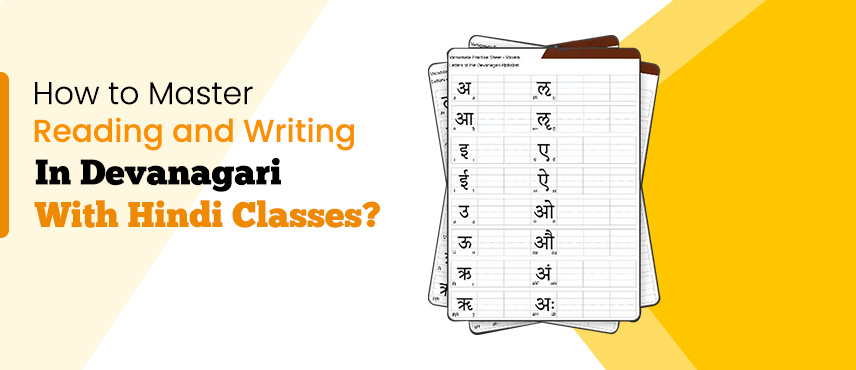
How to Master Reading and Writing in Devanagari with Hindi Classes?

The Devanagari script is one of the oldest scripts for writing Sanskrit and other Indian languages. Many people are not aware that the Devanagari script is the foundation of languages like Hindi, Marathi, and Sanskrit. Nowadays, the Devanagari script is still used as evidence of our diverse cultural heritage. Devanagari is more than just a writing system with its complicated symbols and characters. It is an integral part of India’s linguistic and literary heritage. In this blog, we will learn the tips for mastering the Devanagari script by taking Hindi classes.

Ways you can Master Reading and Writing Devanagari with Hindi classes

The Devanagari script forms the foundation of the Hindi language. Mastering them is important for those who want to become fluent in reading and writing Hindi. However, if you are a beginner, the script might seem complicated because of its symbols. This is where Hindi classes come into the picture. These classes offer structured lessons so you can read, write, and master the script of Devanagari via Hindi classes. It will make it easier for learners to grasp the knowledge of Devanagari via Dr. Sonia Sharma’s Academy, which excels in making the Hindi language accessible to anyone globally. Let us dive into details to know how you can become proficient in reading and writing Devanagari script through Hindi classes in New York:

Step-by-Step Learning Approach

The biggest advantage of taking Hindi classes is that they follow a structured approach to learning the Devanagari script. The students are introduced to Devanagari systematically, from basics to more complex concepts. This does not make students overwhelmed, and they engage more in the classes.

The first step in learning the Devanagari script is to understand the concepts of vowels and consonants. With Hindi classes, you will learn these letters with proper pronunciation and order, ensuring that you write them correctly. Since we all know that the Devanagari script is phonetic, it is important to learn how each letter sounds, and you can read them fluently with practice.

After students are comfortable with the basic letters, they are introduced to Matras (मात्राएँ), which modify the pronunciation of consonants. Hindi classes allow you to practice different Matras, ensuring that students can form words and read them properly. If the Hindi classes in New York have a proper curriculum, students get the confidence to read and write the Devanagari script correctly.

Interactive and Practice-Based Learning

Hindi classes are designed in such a way that they focus on practice, making sure that students not only memorize the script but also learn how to use it efficiently. You must take time to practice writing the letters and sentences so that you can become familiar with Devanagari script. If you are looking to improve your reading skills, you must read Hindi short stories and poetries. By practicing it loudly, you can improve the way you pronounce Hindi, thus increasing your fluency in the language. Taking Hindi classes will introduce you to common Hindi words and phrases, making it simpler to understand the patterns of the Devanagari Script.

If you want to improve your Hindi writing skills, only practicing the Hindi alphabet and forming sentences can help you do that. This will ensure that you understand Hindi letters and know how to make meaningful sentences. The practical classes not only make your learning experience engaging and effective but also build your accuracy in the Hindi language.

Understanding the Structure and Grammar of Hindi Sentences

You should understand Hindi grammar and sentences when recognizing Hindi letters. This is important for becoming seasoned in this language. In English, we follow Subject-Verb-Object. In Hindi, we follow Subject-object verb order.

For instance, the English sentence “I eat an apple” is written as “मैं सेब खाता हूं” in Hindi, where apple is an object which comes before the verb. Hindi classes in New York follow these differences and provide assessments to students to get a better hold of the Subject-object verb order. Hindi classes break down these rules into simple explanations, allowing students to grasp them without difficulty. By practicing grammar exercises related to the Devanagari script regularly, students improve their writing accuracy and overall fluency.

Getting Exposure to Hindi Literature and Culture

Learning Hindi is more than mastering the script, you get to understand the rich culture of the Devanagari script, and get used to the knowledge of how it is associated with the language. You will be introduced to various Hindi stories and literature which will give you deeper knowledge of the language.

For instance, you will learn about famous Hindi poets who help you understand the rhythm and beauty of the Devanagari script. This real-world exposure to the Hindi language allows you to develop a natural understanding of the language.

Confidence in Using Hindi in Daily Lives

There are many people even today who hesitate to use Hindi in real-life circumstances because they lack confidence in their reading and writing skills. Enrolling in Hindi classes, this fear is eliminated, as students get practical use cases of what they are actually learning.

For example, learners are encouraged to practice writing short paragraphs, maintain daily journals in Hindi, or even send messages using the Devanagari script. Through consistent practice, students build the confidence to read Hindi newspapers, write formal emails, and even engage in professional communication in Hindi. This practical knowledge makes learning Hindi not just an academic exercise but a useful skill in everyday life.

Final Thoughts

To conclude, reading and writing in Devanagari might be challenging; however, with the right guidance, you can become proficient in it. Whether learning for academic or personal reasons, enrolling in Dr. Sonia Sharma Academy Hindi classes can take your Hindi learning journey to the next level.

Hindi Courses: A Gateway to Understanding other Indian Languages!

Hindi is a native language of India. This rich and vast country has many other regional languages. Hindi and English remain the official ones. However, the other speeches do enjoy the same level of respect and authority among the natives. This diversity is the jewel that perfectly adorns the richness of democratic India. If you are interested in understanding at least a gist of these varied languages, a Hindi language course can offer you a gateway.

Some of these regional linguistics (except Dravidian) have either evolved from Hindi or are ancient to the language. Whatever way, you will be able to descend or ascend to a basic comprehension of these vernaculars with the help of online Hindi lessons.

Ways the Hindi Courses Learners can Comprehend Other Indian Languages

The attractiveness of Hindi courses is immense. One of them is the vicinity of the Hindi language to numerous other linguistics that make you multilingual at the basic comprehension level. How? Continue reading to get an answer.

1. Mutual Intelligibility of the Linguistics

Do you know about the bonus part of online Hindi classes for beginners? You will be able to understand some aspects of the regional speeches in India, which once belonged to the Indo-Aryan family, like Hindi. There are many of those vernaculars. They include the famous Bhojpuri, Marwari, Punjabi, and Gujarati. Among them, Urdu is the most intelligible one with common grammar and phonetics. The only difference between them is the script. While Hindi is written in Devanagari script, Urdu has evolved with the modified Perso-Arabic script.

Furthermore, there are some local Indian languages with the same Indo-Aryan origin, such as the Oriya. Hindi and Oriya do have a similar grammatical structure. But there is a difference between them due to their unique vocabularies and distinctive scripts. While Hindi language classes can help you comprehend the basic level of those mutually intelligible speeches, you can get a grasp of Oriya grammar by learning the Hindi language.

2. Exposure to the Related Languages

Exposure and education to mutually intelligible languages have been key factors for those who have opted for Hindi classes in New York. They are able to understand other Indian languages. Many local Indian speeches are popular internationally. For example, if you hear the tunak tunak tun tune, you will easily tell the Punjabi singer’s name. Likewise, there are a lot of Punjabi songs that are popular for their influence on popular culture.

You can grasp some of the Punjabi words quickly if you are well-versed in Hindi. Furthermore, those Hindi enthusiasts who have Indian friends or colleagues, they can comprehend their friend’s local language to some extent. Only if the speeches are mutually intelligible!

3. Acquaintance with Similar Local Languages

As you interact, there is always an exchange of language during that period of communication. You can take the example of North Indians with some kilometers of distance, the language deviates. From Bhojpuri to Maithili, the local languages are varied. However, North Indian individuals who interact with each other while traveling or during their business trips become adept at comprehending each other’s language. Their commonness lies in the Hindi language, and the rest of the speeches they can easily understand if they are mutually intelligible.

Moreover, this is the same scenario with the New York natives they have their Indian friends from different Indian states. If those New York natives have learned Hindi from Hindi classes in New York, they will be able to understand the mutually intelligible local speech of their Indian friends.

4. Cultural Exposure Can Help

The Globalization of the digital world has accelerated the process of cultural exchange among the people living at an oceanic distance between them. For example, as you watch an Indian movie, you can grasp some useful Hindi vocabulary that you have already learned in your online Hindi lessons. Also, as you progress learning the Hindi language and watch the Bhojpuri movies, you will be able to understand the speech in a better way.

You will be able to comprehend some of the vocabulary and the verbal expressions. Thus, the cultural exposure to the Hindi language helps you significantly enhance your understanding of other regional Indian linguistics.

Street to Exposure with one of the Best Online Hindi Courses!

Are you intrigued with and attracted to the diversified Indian languages? There are around 780 languages in India, out of which only 22 are the official languages. It will be a very long way to learn all of them in this lifetime. Chances are that you might not be able to learn all of them. However, you can get a basic understanding of most of them, which are mutually intelligible in Hindi. Now, your Indian language learning thirst is reduced to only one. You must pay your undivided attention to the Hindi linguistic practice and explore this versatile language at its best.

If you are working or are unable to take an offline Hindi course for yourself due to some reasons, there is a more flexible one for you. You must opt for online Hindi lessons from Dr. Sonia Sharma Academy! Here, we offer you the best learning experience to help you advance from basic to expert in the Hindi language at the most affordable price. Connect now to enroll!

Traditional and Online Hindi Learning Classes: Which One is Good?

The traditional form of learning and probably the base of the academic learning for many centuries. Teachers and students interact through this, which is a physical sort of sphere of learning. They can even share information, and feel the learning world around them. Online Hindi language learning has gained immense popularity with the advancement of technology and the internet. On top of that, the COVID-19 pandemic gave rise to something more unique that is distance learning. This made all institutions take Hindi classes virtually. In this blog, we will know which is better online or traditional Hindi language learning.

The Origin of the Hindi Language

The Hindi language is a dialect of Sanskrit that dates back to 769 AD. The language gained its popularity over time, initially known as Old Hindi, which was spoken widely across all the regions of India. It is the beginning stage of the Hindi language that was written in the Devanagari script. As time went on, the Hindi language evolved through various stages, which was influenced by languages like Persian, Arabic, and Turkish during the era of the Delhi Sultanate and Mughal Empire. This period saw the introduction of many loanwords and expressions into Hindi, enriching its vocabulary. By the 19th century, the modern form of Hindi, as we know it today, began to take shape, influenced by both regional dialects and formal standardization efforts.

Difference between Traditional and Online Hindi Classes

The way of learning the Hindi language has evolved from traditional to online. In this digital age learning a language has never been more enticing. We live in an interconnected world, and the ability to speak multiple languages has become one of the valuable skills. Traditionally learning Hindi is not very feasible as compared to online Hindi lessons. Some of the differences between traditional and online Hindi classes are as follows:

Location and Convenience

You know that traditional Hindi classes need your physical attendance, whether in a classroom or any coaching center. This can be restrictive as it requires students to travel to the class and follow the fixed schedule. Online Hindi lessons provide flexibility as you can attend classes from any part of the world. You just need an internet connection and you can experience more convenient and accessible learning experiences.

Schedule and Timing

Online Hindi classes in New York give you more flexible scheduling options. Our learning platform offers pre-recorded lessons if a student is unable to attend the class due to any inconvenience. Online classes make it easy for students to grasp the beauty of this Hindi language at their own pace and convenience. Meanwhile, traditional classes run on a fixed schedule and the student might have to attend the classes at a certain fixed time. You might not any access to have the lesson just in case if you miss the class due to some personal commitments.

Learning Pace

A traditional class has particular curriculum guidelines to follow, and the speed of learning is determined by the instructor and how quickly the class progresses. Such as, you might find a curriculum that would be followed by students and teachers alike. In traditional Hindi classes, this can lead to a scenario of getting left behind quickly in the class. Online Hindi language learning classes allow learners to follow their own pace of learning. With on-demand videos and interactive tools, learners can revisit lessons they find challenging. This allows for students to have a more personalized learning experience.

Interaction and Engagement

Hindi classes in New York might lack face-to-face interaction, but they provide live sessions and forums to have a virtual community. This community is very useful and can help you clear your doubts and confusion that you are facing in Hindi language classes. It is kind of engaging but sometimes lacks the vision of a classroom. Meanwhile, traditional Hindi language classes offer face-to-face interactions that can enhance language acquisition by encouraging social interaction.

Personalized Attention

The traditional Hindi classes may have students that are huge in number. It means that the teacher might not be able to give personal attention to each student. These Hindi language learning classes happen often in groups, so the attention to students might be limited. Online Hindi lessons can offer more personalized attention as these classes can be held in groups or one-to-one sessions. The teacher can track your progress and give you suggestions to improve your Hindi learning skills.

Cost-Effectiveness

Hindi classes in New York online can be more affordable because of overhead costs like setting up classes. These classes make it a budget-friendly option as compared to traditional Hindi language classes. The traditional classes are costlier as it has overhead costs ranging from rental space to the fee of the instructor.

Accessibility to Resources

While traditional Hindi classes outline the course in books or handouts. Such resources are limited and do not always align with your preferred learning styles. Online Hindi lessons provide a wide range of digital resources from videos to downloadable content of Hindi classes. They are often curated based on the learner’s learning style.

Final Thoughts

Thus, Online Hindi classes are more convenient than traditional classes as they offer more flexibility. Do you want to learn Hindi? You can come to Dr. Sonia Sharma Academy and improve your language learning abilities.

How to Quicken Hindi Writing with Hindi Speaking and Language Course?

Aa chal ke tujhe leke chale…these songs in Hindi are evergreen. As an international listener, you might not know about the message this song delivers but the honey-like music flows exactly to the right point in your heart. That sweet ping in your heart with every ebb and flow of the music explains the popularity of Hindi the best. The music with those un-decipherable words seems like you will want to pour every effort into listening to them with the best experience. So, why not learn to speak as well as write the language with a Hindi speaking and language course?

Once you master writing the Hindi language and understand their meanings, you will be able to enjoy Hindi more. That may include Hindi music, folks, stories, and much more. Perhaps, you will want to start a career in Hindi or move to reside in India permanently. Then also, Hindi classes in New York will offer you great help.

Ways to Write Hindi Quick with Hindi Speaking and Language Course

When you want to learn Hindi fast and enjoy the benefits it offers soon, online Hindi lessons can be of great help to you. How can you quickly write Hindi with these lessons? Continue reading to get expert tips.

1. Start from the Basic

Do you know the basics of the Hindi language? It entails 11 vowels and 33 consonants. We call vowels as swar in Hindi and consonants as vyanjan. You start from learning the swar and jump into learning the vyanjan when you have mastered the latter. Besides, these vowels and consonants are fundamental towards pacing up your Hindi writing. Once you are done learning them in your expert online Hindi classes for beginners, you can move on to the next step.

2. Regularly Practice

Practice holds the capability to unlock any potential in you and help you reach great heights of success. This is the same for the Hindi language as well. Be consistent and you will be able to easily conquer your aim of learning to write Hindi fast. For instance, you can devote half an hour of your everyday time to writing Hindi texts. Use the lined notebook or graph paper, to accommodate proper alignment and stature into your writing habit.

Furthermore, you must ensure that you write slowly but accurately. With time, you increase your speed but never compromise with the accuracy. That 30 min can be increased if you get comfortable with writing Hindi. Also, get your writings checked by Dr Sonia Sharma – your expert from one of the top Hindi speaking courses.

3. Trace, Copy, and Memorize

Use the textbook or the worksheet you have been recommended in your online Hindi classes in New York. Trace the letters in that textbook. Keep tracing and practicing until you master every letter. Once you get a grip on how to write the Hindi letters on the trace lines, start copying them without tracing. Here also, you must keep practicing until you master and memorize the letters properly. Now, close the book, and try writing the letters based solely on your memory.

Write, check, and rewrite until you become a virtuoso in the same. At last, you must try combining these letters and forming meaningful words.

4. Learn Common Words and Phrases

Hindi language has certain words and phrases that accentuate its appeal by engaging the reader or the listener. These phrases popular by the name of kahawat and lokotiyan, are common among the Hindi people. It is likewise the proverbs that English speaking individuals say among themselves. These proverbs are practical and engage the other person.

That is why you must also learn them in Hindi and write the best of your Hindi text. Also, you will be able to understand Hindi better this way as most of the common Hindi speakers or writers use these phrases frequently. Hence, you should pay proper attention to these common words and phrases in your Hindi Speaking and Language Course. This may include greetings, proverbs, and much more. Be sure to not miss any of them and practice regularly.

5. Visual Association and Mnemonics can Help Greatly

There are many objects that you see every day around you. Have you wondered if they can be of a big help to you while learning the Hindi language? The Hindi characters have shapes and sounds that can be linked to the objects around you. Also, you can form a bridge between the sound of the Hindi characters with your native language. This can help you to form a connection for easy learning.

Furthermore, you can use mnemonics that include creating a story on those words relating to any object, person, or incident in your life. This will make your Hindi writing a bit more enjoyable and faster at one of the best Hindi speaking courses.

Learn and Master Accuracy with our Hindi Speaking and Language Course!

Learning Hindi can be an enjoyable journey when you learn with the experts and follow the right tips as well as tricks of practice. This will quicken and simplify the process. My Dr. Sonia Sharma Academy is designed to offer you the full taste of the expert Hindi Speaking and Language Course. Here, we equip you with significant aid in your practice, offer you the right guidance, teach you from basic to advanced, etc. Hence, you emerge as a full expert in the Hindi language. All of that at the most affordable fee. Connect today and enroll in our class!

Learning Hindi in 2025: Why Online Classes Matter

Whenever it comes to learning a new language, it is always a challenging and exciting journey. Many people decide to take Hindi-speaking classes online because of its rich cultural heritage and the way it is expanding all over the world. Many people get captivated because of its beauty and complexity. As you all know that Hindi is a vibrant language deeply rooted in the Indian culture and society.

Learning this versatile language is not without its challenges and any regular learner faces challenges with pronunciation and vocabulary. However, with hard work and dedication you can overcome these challenges and make progress in your learning journey with online Hindi lessons. In this blog, we will know why Hindi online courses matter.

Why you should take Hindi-speaking classes online?

As you continue to take Hindi language courses you will discover that this language is more than just a linguistic puzzle that needs to be solved by the learner. It is a language full of nuances and subtleties that unlock the richness and diversity of India. For many people around the world, it is better to learn Hindi online and the reasons are as follows:

Spoken Globally

We all are aware of the fact that Hindi is spoken by 260 million people across the globe as a native language. Countries like Nepal and India use Hindi as a 2nd language because of the large number of speakers. It is known as the 4th most spoken language in the world apart from Chinese, Spanish, and English. It indicates that there are more Hindi speakers than Arabic speakers. So if you are looking forward to learning Hindi you can learn it from Hindi speaking classes online and you can practice them easily with the help of a mentor.

Backed by Culture and Heritage

It is known that the Hindi language is backed by great culture and heritage. It is derived from Sanskrit which is the oldest language in the world that takes you back in the old times.

The most rewarding aspect of learning Hindi from Hindi-speaking classes online gives you the chance to connect with people from various backgrounds and cultures. By learning Hindi, you can communicate well with the people where Hindi is spoken the most like India and Nepal. You can gain a unique perspective and experience of the people right there.

Appreciation of Hindi Literature and Cinema

Apart from the benefits Hindi speaking classes online give one a chance to appreciate Indian Literature, music, and film. Ranging from epic poetries to modern write-ups of Indian Authors they provide a wealth of information about Indian culture and society. When you are engaged in Hindi classes you can see Hindi movies with translation that helps you understand the language clearly and concisely.

Improved Learning Skills

Learning this global language with Hindi-speaking classes online can help improve your learning abilities. As you go forward you will gain efficiency in this language by listening and understanding the language. You can listen to Hindi podcasts available on many online platforms as a practice apart from taking online Hindi lessons. It is a saying that we learn a language by listening more effectively. You can analyze the different tones, pronunciation, and flow of the language.

Providing Professional Opportunities

No doubt that India is home to people with diverse skills and a job market. If you take up Hindi speaking classes online it can provide you an opportunity to work with Indian Companies. This will help in increasing your professional network and increase the chances of employment. If any company wants to do business with South Asian countries, they should think of adding Hindi to their language repertoire skills as it’s an unimportant language when tying up business opportunities in India.

Improves Cognitive Abilities

We all are aware of the fact that our brain can develop properly when going for Hindi speaking classes online. Learning a language usually improves your ability to remember all the alphabets and letters. By doing this it can improve the sharpness of the brain and enhance the functioning of the brain. You can pick up new words more easily and will build up your Hindi vocabulary efficiently with the Hindi language course.

Great Influence

Hindi is one such that has a rich influence in India as well as abroad. There is a fact that the English language borrows many nouns and adjectives from Hindi. For example, words like Jungle, Bungalow, and Yoga are derived from the Hindi language only. You should give it a try for Hindi speaking classes online.

Final Thoughts

To conclude, grasping any language does take a lot of time and practice. You will find many resources and classes online to learn this beautiful language. It is worth your investment as it improves the function of your brain to broaden your knowledge about Hindi culture. Are you someone who wants to learn Hindi? Look no further as you can join a Hindi online course that will guide you better and will make you proficient in Hindi.

What Career Opportunities Await as You Learn Hindi Online?

It is always exciting to learn a new language. The satisfaction of being the owner of a new language and its intricacies is beyond explanation. Furthermore, every language brings out its own set of benefits and opportunities when you learn them. Also, when that language is Hindi, the opportunities are skyrocketing. However, the busy day-to-day life and the 9 to 5 hustle may not permit you to enroll in a Hindi language class. But with our virtual Hindi classes at Dr. Sonia Sharma Academy, you can learn Hindi online while maintaining coherency with your daily schedule.

Furthermore, how can you leave behind learning Hindi with its increasing popularity and the career fortune it entails?

Learn Hindi Online and Enter the Top Career Gateways

Hindi is a beautiful language, and far from its beauty, the Hindi career opportunities are immense. It is a total benefit to learn Hindi! However, what are those career opportunities? Continue reading to know about them.

1. Hindi Journalism in India

The Indian residents do ace in this regard as they are already acquainted with the Hindi language. However, for those of you who are planning to migrate to India, this career opportunity may bring the best potential out of you. If you are planning to fly to India to study abroad, journalism can be the top career choice for you.

What about basic Hindi knowledge and Hindi communication in an Indian land? Don’t worry about this! In this direction, we can help with our online Hindi classes in New York. Once you are confident enough to speak and write Hindi, fly to your dream country and be the next Ravish Kumar.

2. Content Editor or Writer

A single query is on your mind, and you open up the Google search bar to see numerous websites popping up with their solutions. What do you think? Who has written the content of these websites? The content writers and their contents passed through grammatical and structural scrutinization by the editor! Indeed, content writers and editors are greatly popular in this digital world. Almost every business is opting for their writing services. So, it’s your time now. Learn Hindi online from our Hindi classes portal and soon start your journey as a Hindi content writer.

3. Write Hindi Speeches for a Living

The Indians are dominating the Global landscapes. Every other country has Indian foreigners thriving and pushing forward their success boundaries. In those countries, along with India, Hindi speeches have immense popularity. So, if you think you can write influential Hindi speeches, we are ready to help you with our online Hindi classes. Hence, whether you live in New York or are planning to reside in India, you can earn a great sum by writing attractive Hindi speeches for influential individuals.

4. Be Next in Line to Mushi Premchand

Creative long-form novels and the poetries in Hindi have always swarmed through every era. The sweetness Hindi poems and shayaris have! Also, Hindi novel writers are on another level when they use their linguistic skills in writing fiction or nonfiction.

Every well-researched writing piece, when written in grammatically sound and smartly arranged Hindi words always leaves the reader hooked. That’s what Munshi Premchand and other veteran writers have done until now. Next in the line can be you! So, start learning Hindi from our online Hindi classes in New York to kickstart your career as a novelist or a poet in Hindi.

5. Write for OTTs

Have you seen the latest Hindi series dropped on OTT? Mind you, the Hindi series is full of drama packed with emotions, comedy, action, and everything about entertainment. But wait, do you believe you have a storytelling capability? Also, do you desire to be a part of this Hindi OTT industry? You can be a screenwriter for a Hindi series on OTT.

What? Are you still thinking, given that you have no touch with writing the Hindi language? What if we tell you that you only need your storytelling capability, and for the rest, you can always learn Hindi online with us?

Write, Edit, or Speak Hindi Fluently with our Online Hindi Classes!

So, now, whether you decide to be a Hindi writer, editor, or novelist, we can help you learn Hindi the quickest at our Dr. Sonia Sharma Academy. Our class is online. Hence, you will learn Hindi online between your 9 to 5 at the most affordable prices. Does it sound interesting? Connect now to start learning!